What is non-contact (laser) thickness measurement?
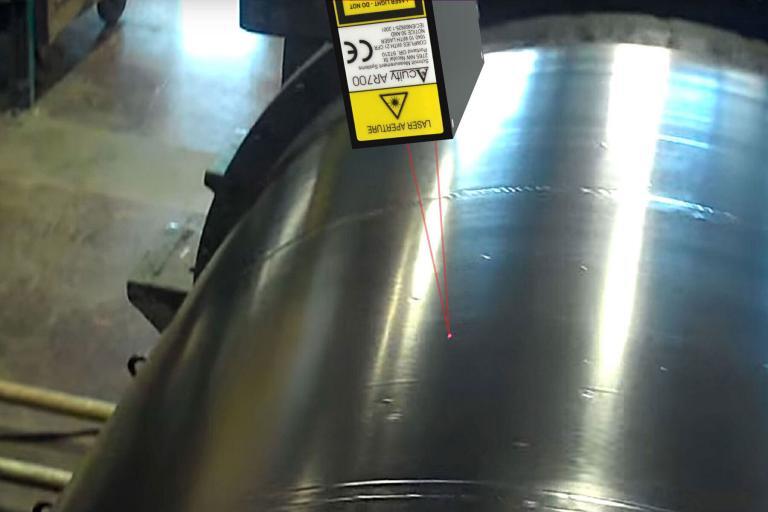
Non-contact thickness measurement, often called a laser thickness gauge, uses laser sensors that never touch the material. The sensors measure the distance to one or both surfaces, and thickness is calculated from those readings. It works on hot, soft, moving or easily marked material.
Should I buy sensors or a complete thickness measurement system?
Buy sensors if you’re building your own gauge or need one or two measurement points. Choose the pre-engineered system if you want continuous monitoring across a production line, with software, alerts, documentation and training included. See how to choose an inline thickness measurement system.
Do I need one sensor or two?
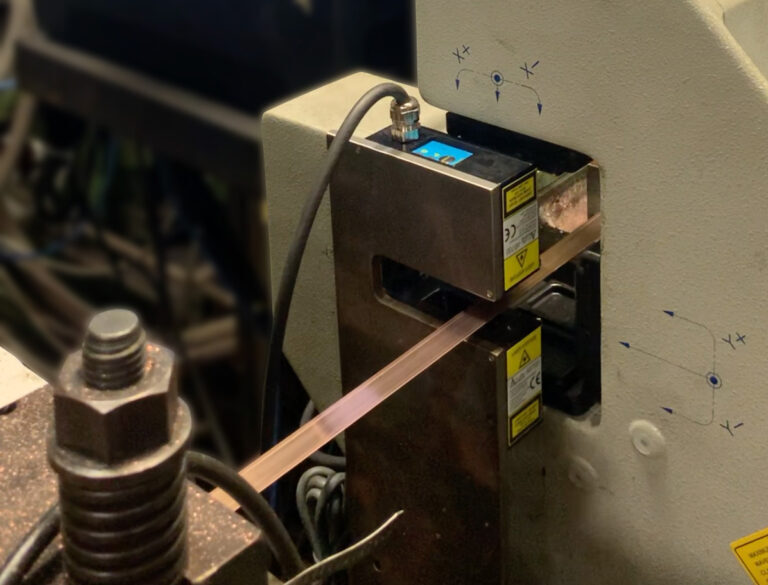
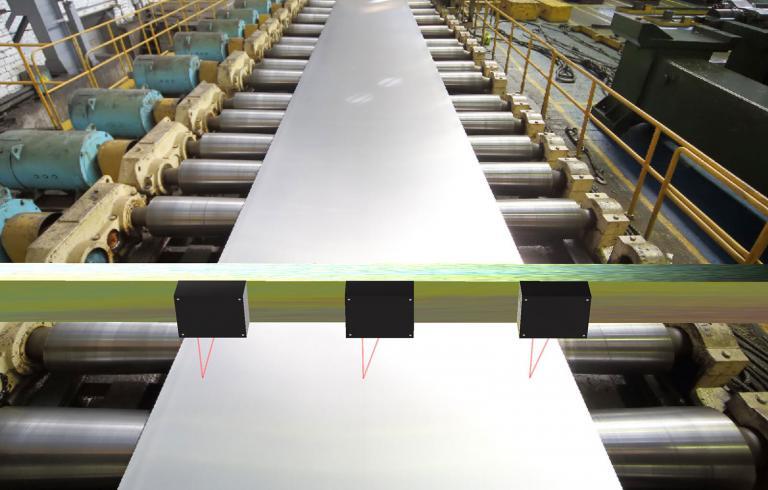
One sensor if the material rests on a conveyor, roller or table: it measures the top surface, and thickness is the difference from that reference surface. Two opposed sensors if the material moves freely between rollers: thickness is the known gap between the sensors minus both readings, and the sensors fire at the same instant so flutter cancels out.
How accurate is laser thickness measurement?
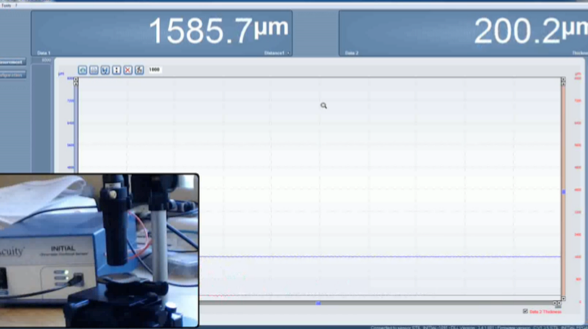
It depends on the sensor and setup. AR700 sensors are linear to ±0.03% of their measuring range, and two AR700 sensors have shown sub-micron readings on a 10 mm block. Confocal sensors held ±0.6 µm on clear film.
How fast can laser sensors measure thickness?
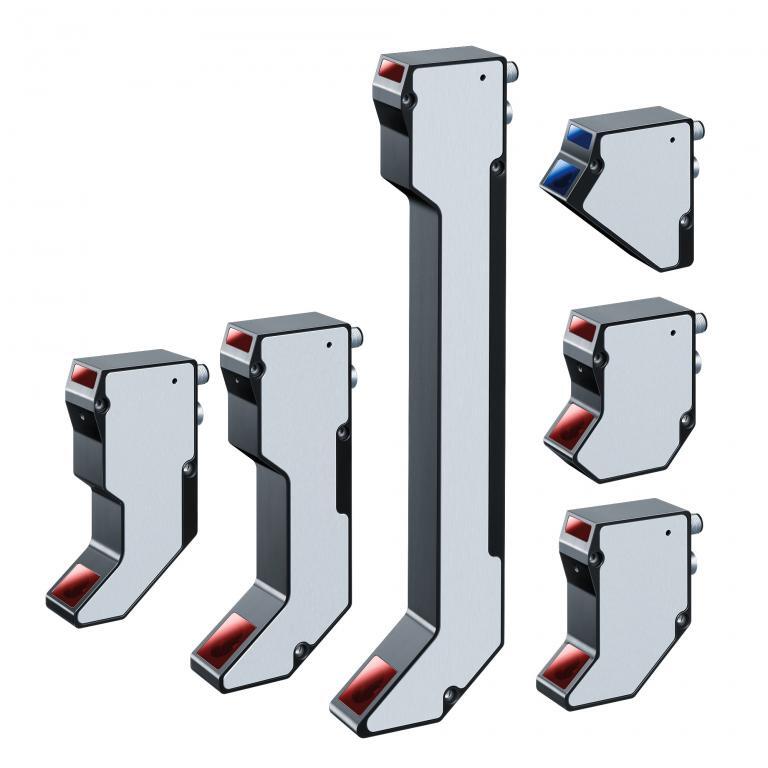
Acuity’s pre-engineered system takes 10 to 1,000 readings per second. Individual sensors go faster: the AR700 samples at up to 9.4 kHz, confocal sensors at up to 10 kHz (5,000 Hz with the ZENITH controller), and C6 compact 3D sensors profile at up to 200 kHz.
Can lasers measure thickness on a moving production line?
Yes. Dual opposed sensors fire at the same instant, so material movement and flutter cancel out. Acuity's Pre-Engineered Laser Thickness Measurement System takes 10 to 1,000 readings per second without stopping the line.
Can you measure the thickness of clear or transparent materials?
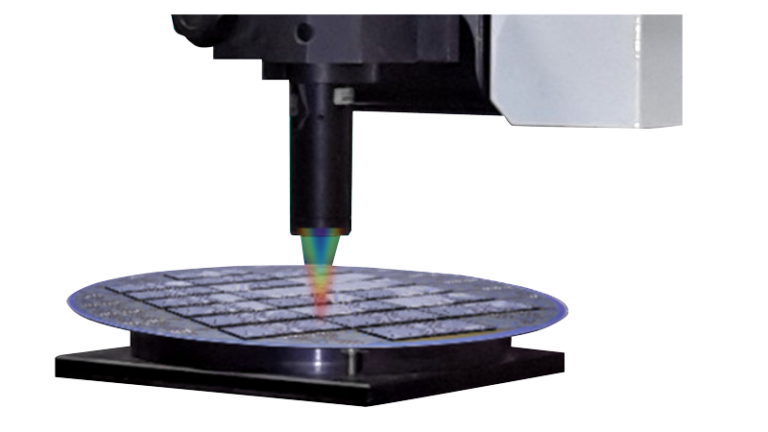
Yes. Confocal sensors measure both surfaces of clear film, glass and transparent polymers from one side.
Can lasers measure hot, dark or shiny materials?
Yes, with the right sensor options. The AR700 offers bandpass filters and higher-power lasers for targets that are shiny, dark or radiating heat, and an AP820 laser line scanner has measured dark plastic sheet.
What materials can laser sensors measure thickness on?
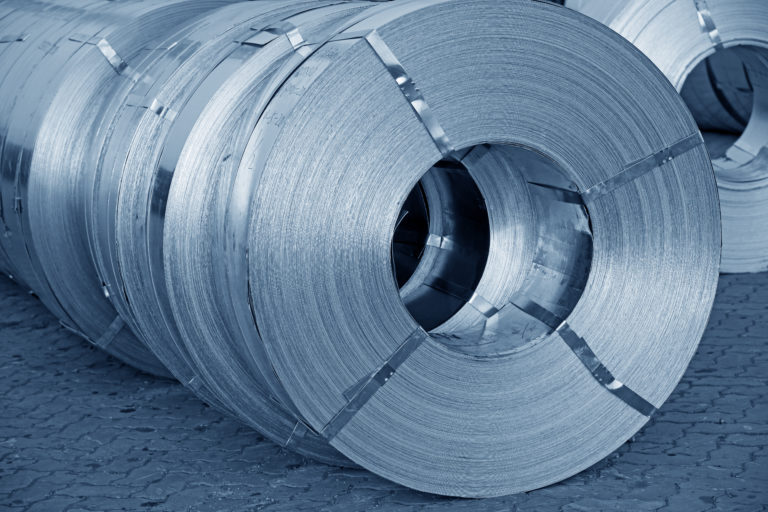
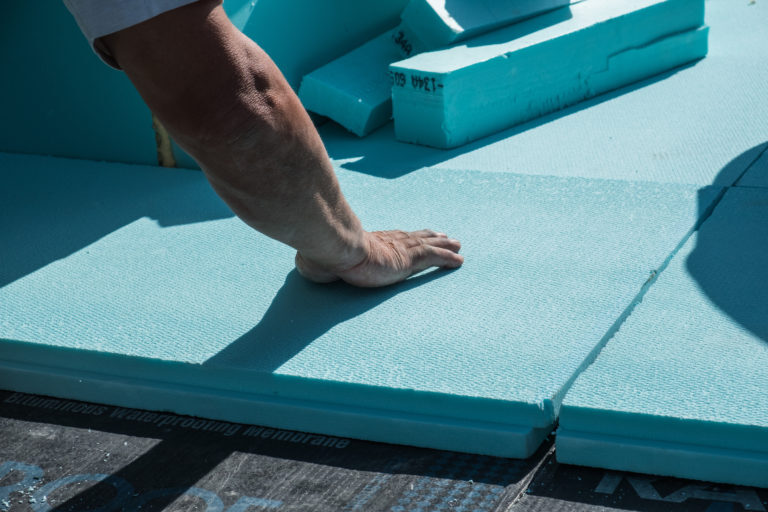
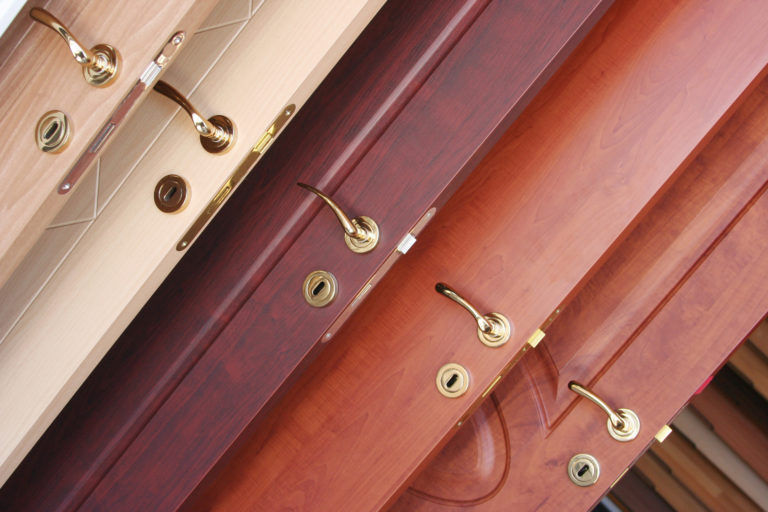
Acuity sensors measure the thickness of copper, aluminum and steel strip, plywood, OSB and wooden doors, foam insulation board, rubber sheet, plastic sheet and clear film. The pre-engineered system suits any material made flat with a target thickness. See thickness applications.
What is an alternative to X-ray or contact thickness gauges?
Acuity’s Pre-Engineered Laser Thickness Measurement System uses non-contact laser sensors. Unlike contact gauges, nothing touches the material or wears over time, and unlike X-ray gauges it uses standard laser sensors and simple wiring instead of high-cost, specialized equipment.
What’s included in the pre-engineered system, and is it customized?
Acuity supplies the laser sensors, a control panel with an industrial computer, software, documentation and training. Each system is set up for your line: the sensor model is matched to the speed and accuracy you need, sensors are oriented horizontally or vertically, and the number of measurement points matches your material width.
How quickly is the pre-engineered system running after installation?
Once the sensors and mounting are installed, the system is up and running and measuring in under 1 hour. Mounting time depends on your line.
Can Acuity test my material before I buy?
Yes. Contact us to send a material sample, and Acuity will test it before recommending a sensor or system.
What information do you need for a quote?
Your material, thickness range, tolerance, line speed and line width, and whether you need a system or a sensor. Get a quote with those details, or call 503-210-5733.
How much does a thickness measurement system cost?
Each system is quoted after a discovery call and material testing. Price depends on the number of measurement points, the sensors chosen and any software integration. Get a quote.