
|
> See below for techical data DOWNLOADS
Acuity's rangfinders are very unique distance measuring devices. They
employ a modified time-of-flight measurement principle that leads to very
fast and accurate measuring speeds.
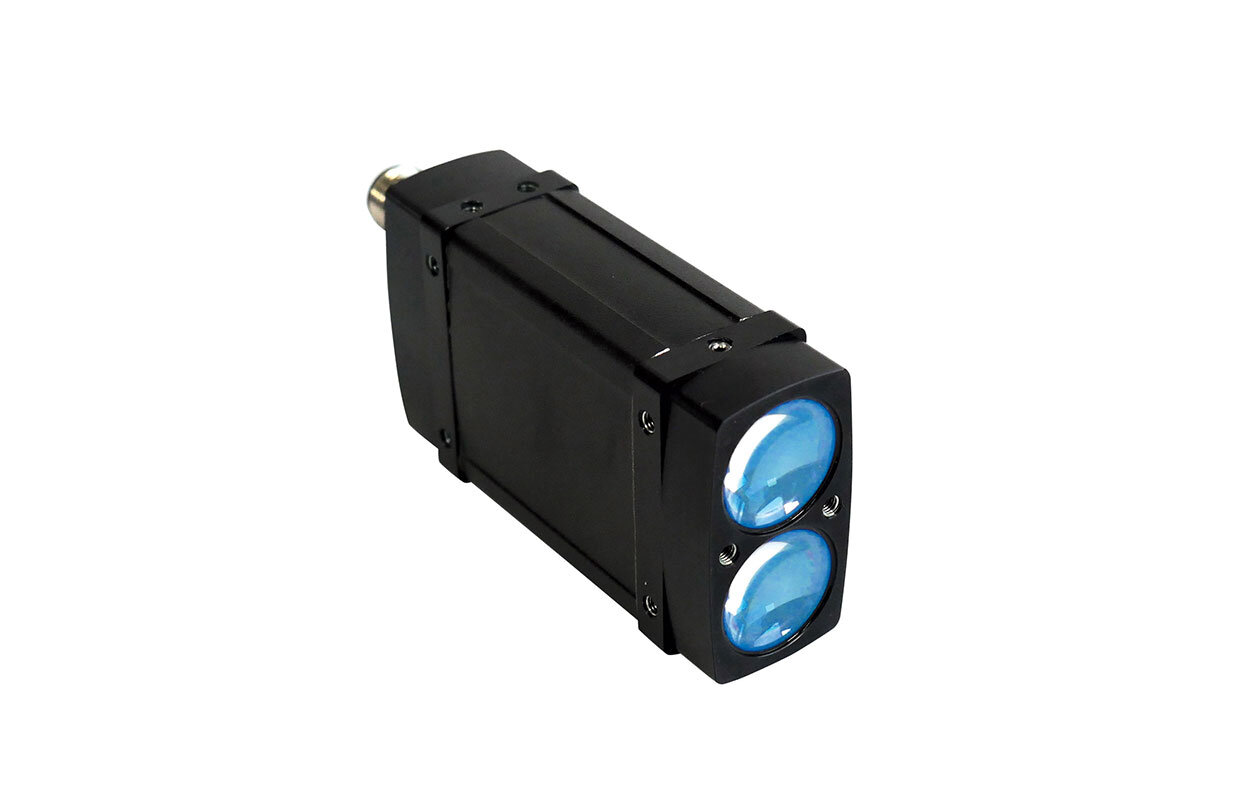
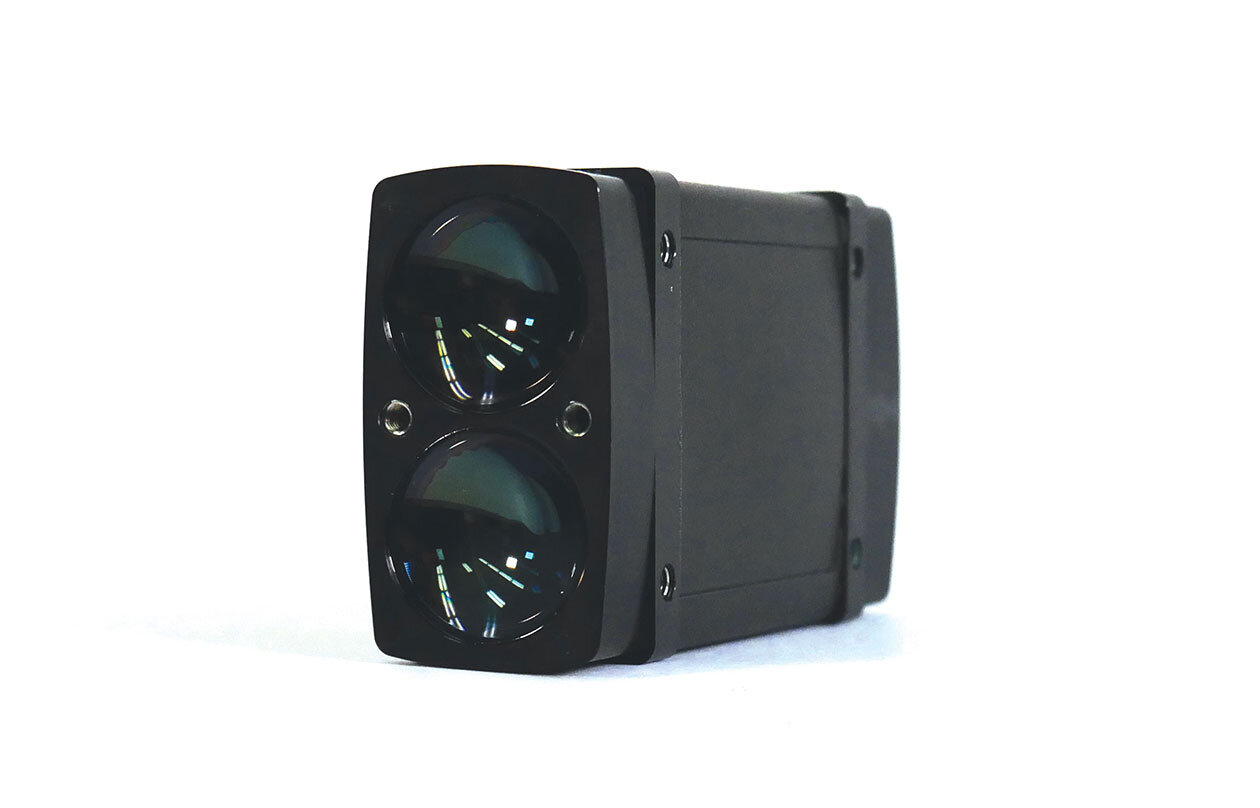
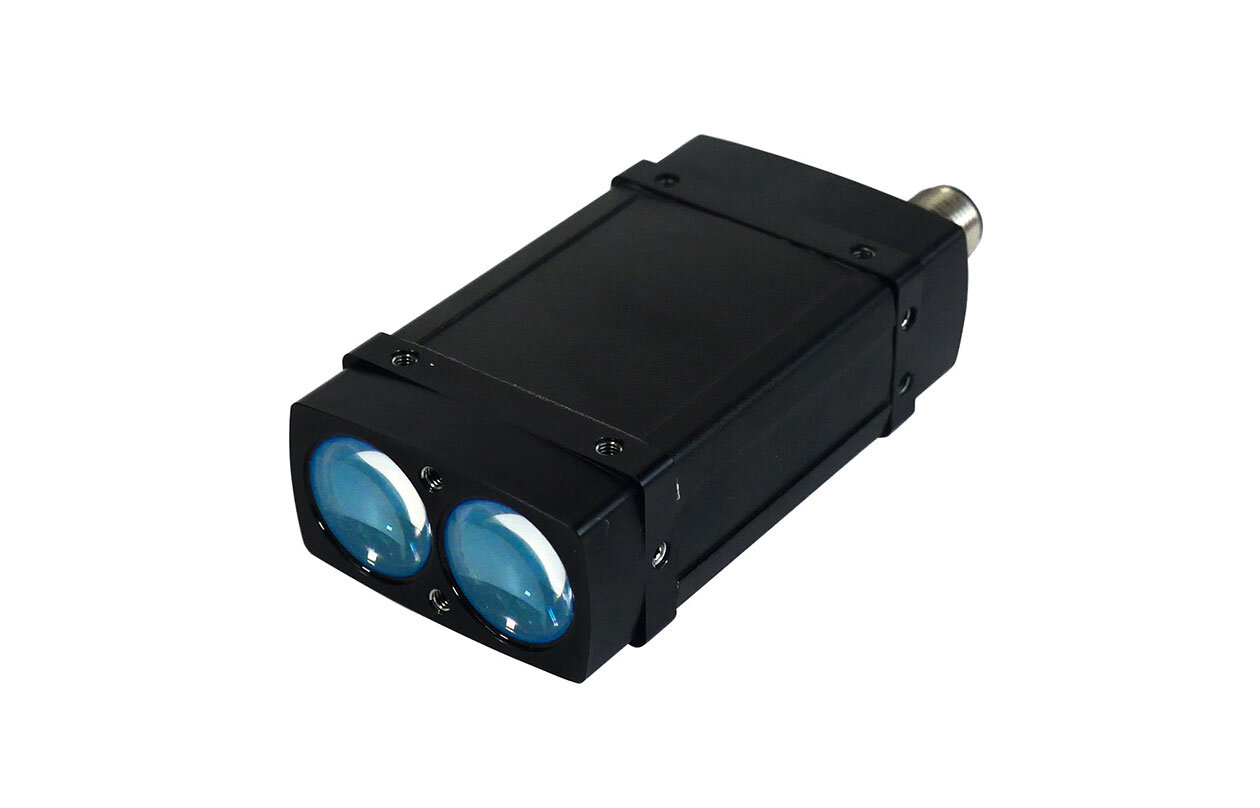
The AR4000 differs from other long-distance rangefinders in that the
laser emitter and return signal collection lens are concentric. The illustration
below reveals the major functionality of the rangefinder. A collimated
beam of laser light is emitted from a diode in the center of the fresnel
collection lens. Light hits a target and is diffusely reflected, collected
by the lens and focussed on an avalance photdiode. The AR4000 distance
measuring technology is patented
(US patent 5,309,212 ).
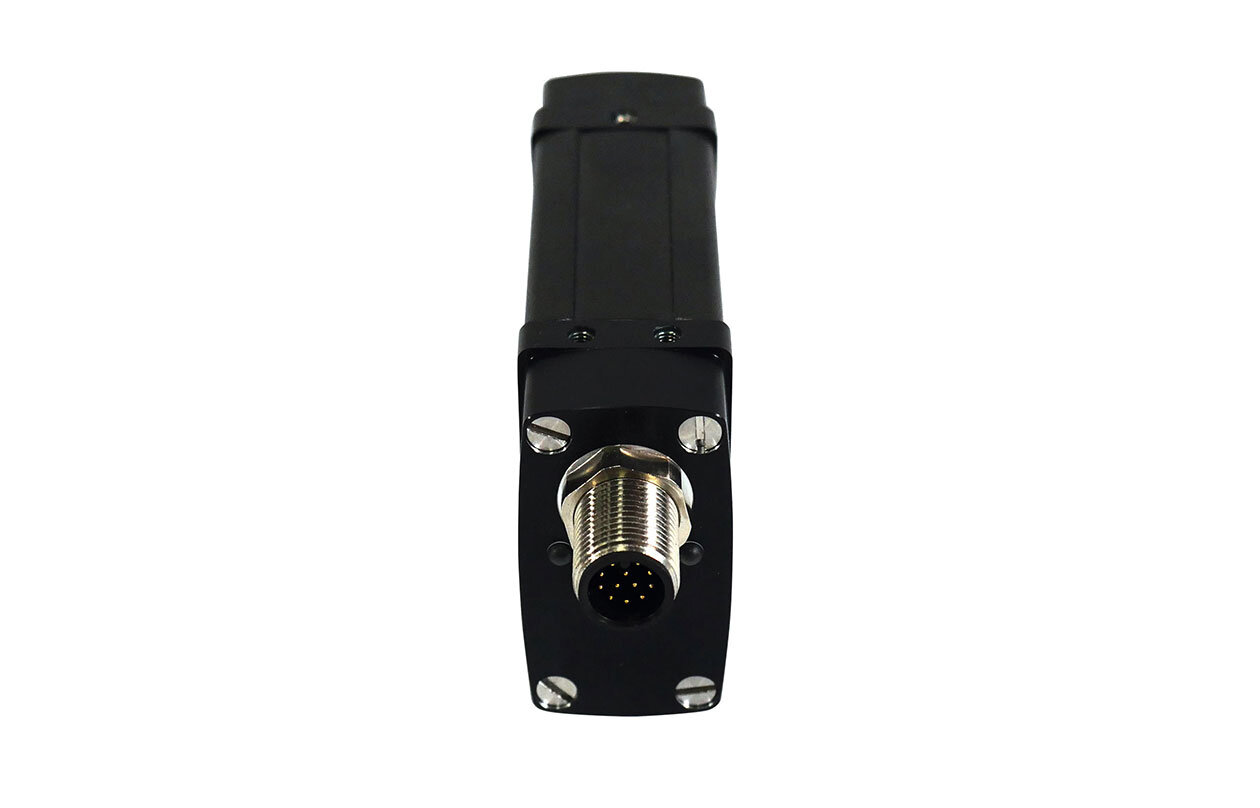
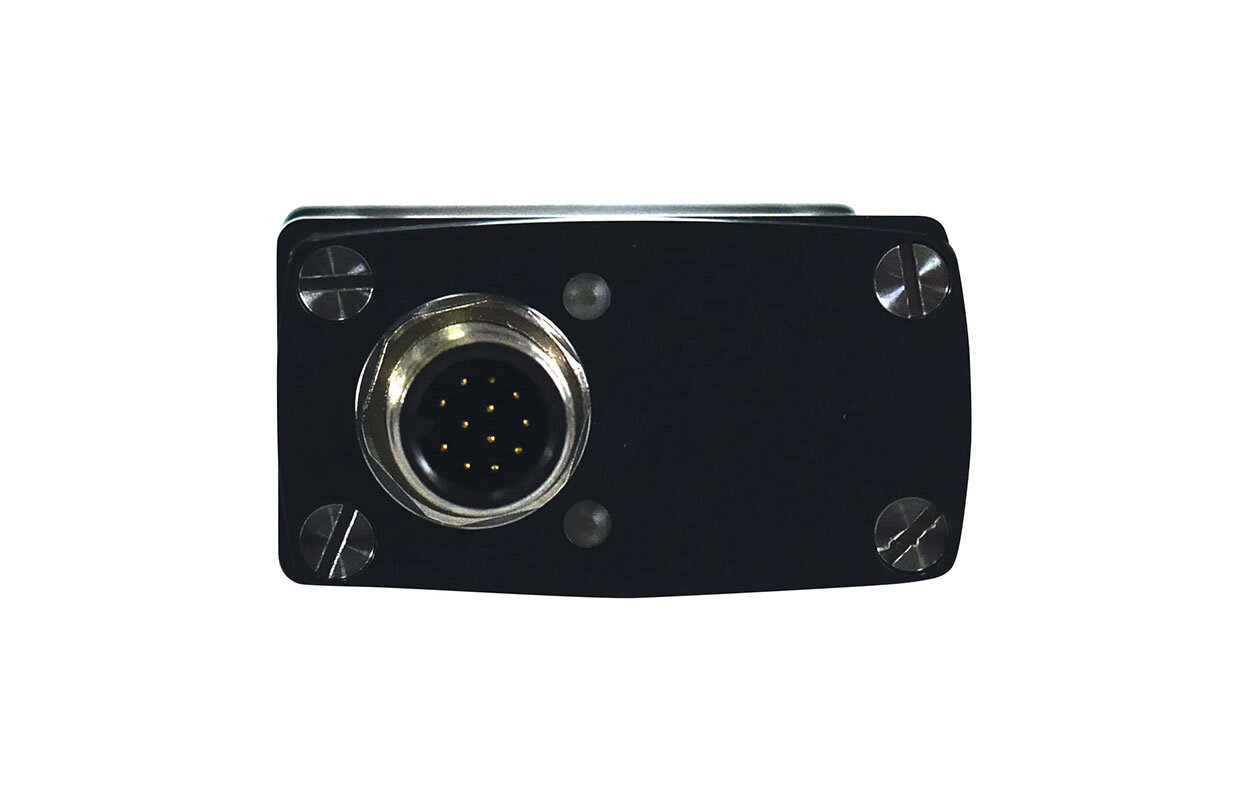
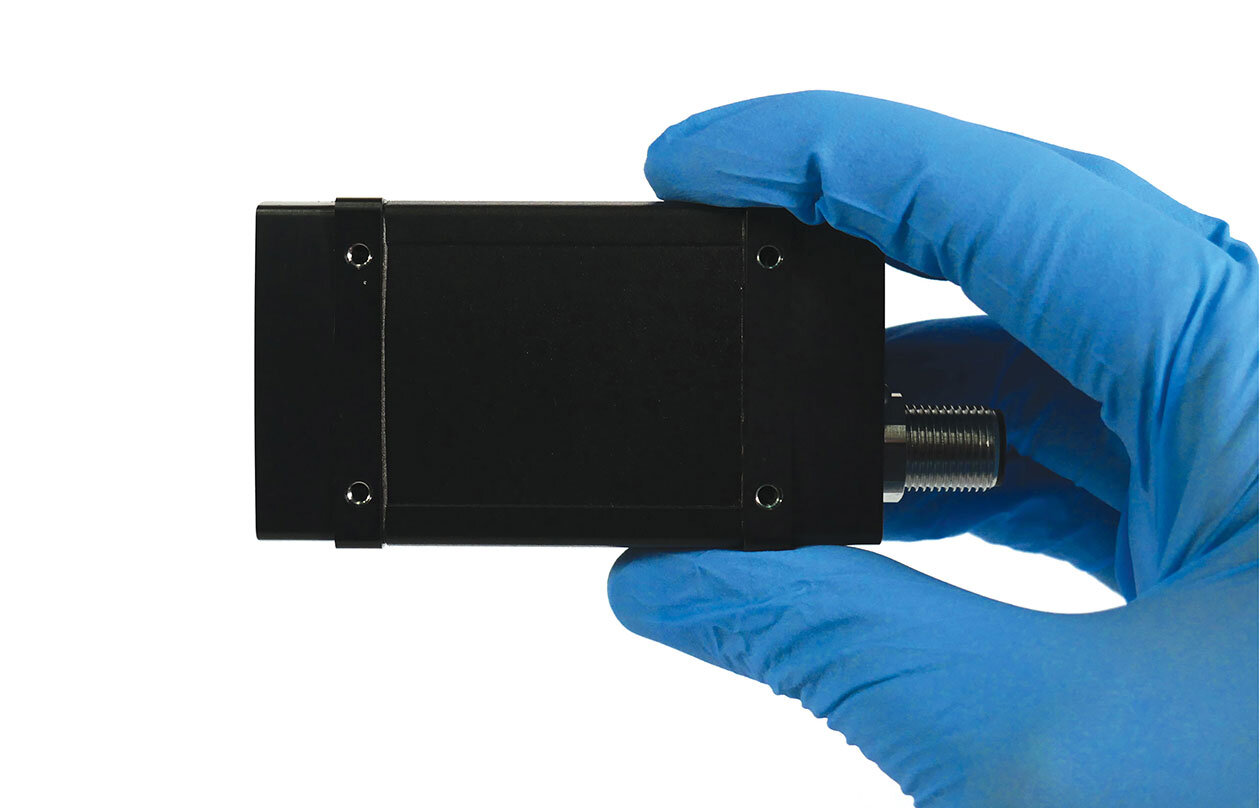
Non-contact measurement is made simple with the three models within the
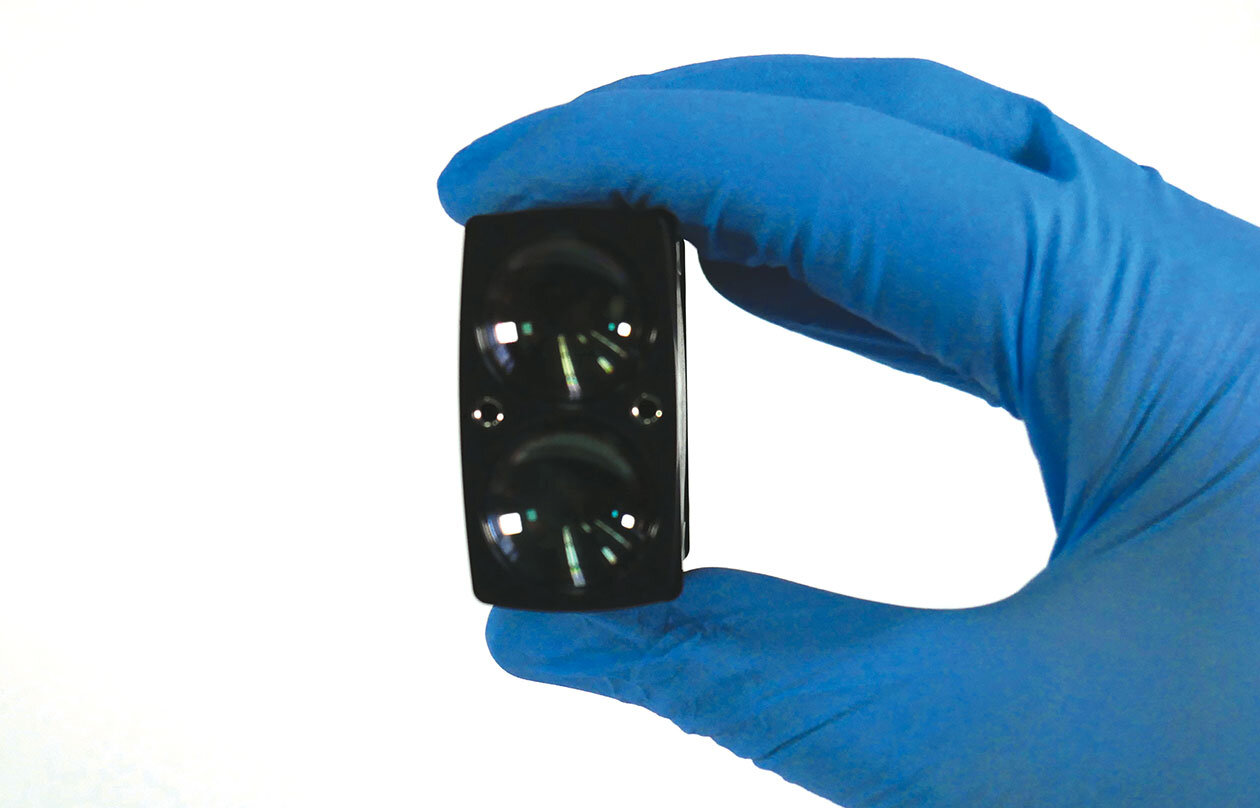
AR4000 rangefinder series. All models are compact and durable, residing
in a NEMA-4 enclosure for challenging industrial environments.
The AR4000-LIR laser rangefinder has a working range to 54 feet (16.45
m) on light surfaces (85% diffuse reflectance, such as paper or light
paint) or 35 feet on a 30% reflectance target with an accuracy of 0.1
inches (2.5 mm). It uses an infrared 780 nm 8 milliwatt laser. This is
the sensor of choice for best accuracy in most applications. An optional
20 mW laser upgrades is also available for the AR4000-LIR sensor with
an accuracy of 0.2 inches, for extended range to darker surfaces (54 feet
on 30% reflectance) and in sunlight.
The AR4000-LV rangefinder has a working range of zero to 40 feet on 85%
diffuse reflectance surfaces or 30 feet on a 30% reflectance target with
an accuracy of 0.3 inches. It uses a visible 670 nm 5 milliwatt laser.
This is the sensor of choice where a visible beam spot is required or
your application must remain under and FDA Class IIIb laser category.
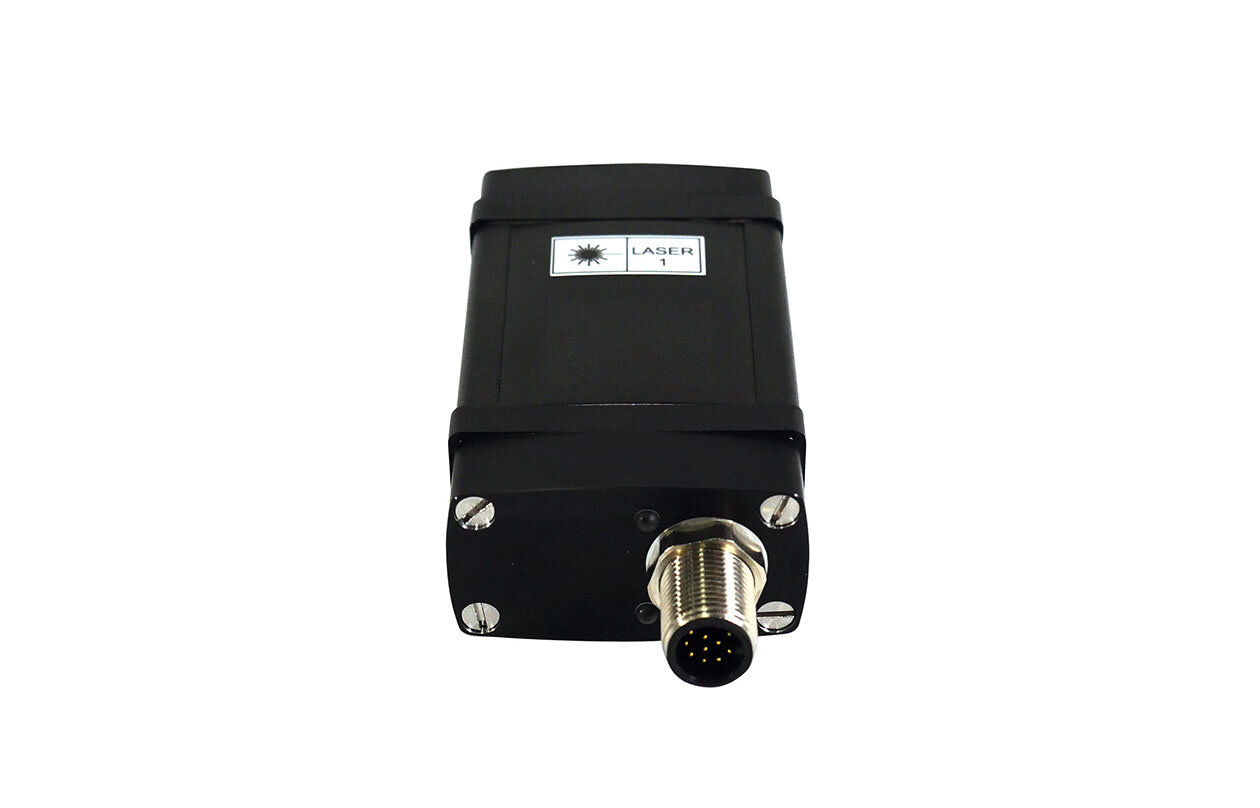
The AR4000-RET distance measuring rangefinder is used with reflective
tape supplied with the sensor. It is a low-power, Class I eye-safe device,
with an accuracy of 0.1 inches (2.5 mm) with a range of 2 to 54 feet (16.5 m). This is the
sensor of choice where it is possible to apply the adhesive-backed
retroreflective tape (3M brand) to the target surface, since this
provides a strong return signal for optimum operation. We suggest using either the 3M™ Scotchlite™ High Gain Reflective Sheeting 7610 or the 3M™ Scotchlite™ Photoelectric Grade Smooth Surface Sheeting 7590 (for weather-resistant applications)

AccuRange™ 4000 rangefinder data sheet
This four-page specification brochure shares all of the technical details
about the sensor includeing electrical, mechanical, software and physical
specifications. The data sheet details the cabling and outputs for the sensor
and gives a list of sensor input commands for configuration. The data sheet
provides explanations for beam divergence and accuracy.
> Access the AccuRange
4000 laser rangefinder Data Sheet
Adobe PDF file size 600 KB
Acuity's AR4000 User's Manual
This user's manual is a multi-page document which explains how to operate
and install the sensor hardware. Output formats are described and sensor
commands are explained at length.
> Access the AccuRange
4000 device User's Manual
Adobe PDF file size 1.7 MB

Output interfaces
Acuity offers the following standard and optional outputs for the
AR4000 laser rangefinder devices:
> Standard RS-232 Serial Output
> Optional RS-422 Serial Output
> Optional Current Loop Output
> Standard Voltage Signals for Signal Strength,
etc.
> Optional Pulse Width Output for high speed
sampling
Standard RS-232 Serial Output
All sensors come with an RS-232
serial output on a 6 foot, 9 pin cable that connects directly to PC
style serial ports. Serial output can be configured for one of several
data formats. ASCII may be used for visual reading with a terminal device
or emulation program, or a binary format can be used with application
software. The data may include calibrated distance output only, uncalibrated
range and other sample data only, or both. The other sample data includes
reflected optical signal strength, background light level, and internal
sensor temperature. These values are also available as voltage levels
on the sensor's power/signal cable. They may be used for external calibration
if the sample rate is too high for each sample to be calibrated internally.
When the binary format calibrated distance output only is selected, the
maximum sample rate is 700 samples per second. Baud rate is selectable
from 300 to 34,800 baud.
Optional RS-422 Serial Output
For long distance communications (more than 20 to 30 feet, depending on
the baud rate), the RS-232 serial output may be replaced with an RS-422
serial output. The available sample rates, formats and software configuration
commands are all the same as for the RS-232. The sensor can also be ordered
with RS-485 (half duplex version of 422), but the AR4000 does not presently
support any standard 485 network protocols.
Optional Current Loop
Output
A 4-20 milliamp current output may be ordered as an option. If the AR4000
is ordered with this output it uses the same output line as the pulse
width output on the power/signal cable, so 4-20 output is not available
on sensors configured for the High Speed Interface. Serial I/O is still
available. The zero and span for the current loop output may be set at
any location, with a minimum span of 9 inches. The span point (20 mA)
may be made closer than the zero point if desired. Either calibrated or
uncalibrated range may be selected. If serial output is turned off, calibrated
output on the current loop allows sample rates of 1000 samples per second,
and uncalibrated range output allows update rates up to 3,000 samples
per second. The 4-20 mA output has a maximum voltage capability of 10
volts, and it is suggested that a 400 to 500 ohm load be used at the reading
instrumentation for best accuracy.
Standard Voltage Signals
for Signal Strength, etc.
The AR4000 has 3 lines which transmit 0 to 5 volt analog signals representing
reflected optical signal strength, ambient light in the target area, and
internal sensor temperature. These may be used to monitor signal quality,
and they are sampled by the High Speed Interface for high speed data acquisition.
The same information is available through the serial interface; these
lines provide an alternate, higher-bandwidth data path.
Optional Pulse Width Output (Standard
with High Speed Interface)
All AR4000 sensors shipped with a High Speed Interface also have an uncalibrated
pulse width output. The duration of the low portion of the pulse changes
linearly with the uncalibrated sensor reading, and the period of the signal
is controlled by the sample rate for which the sensor is configured. This
output is typically used with the High-Speed Interface or application-specific
hardware at sample rates beyond the 700 sample/second limit of the serial
interface. Calibration may be performed externally using the signal strength
and other voltage outputs in conjunction with the pulse width output.
|